
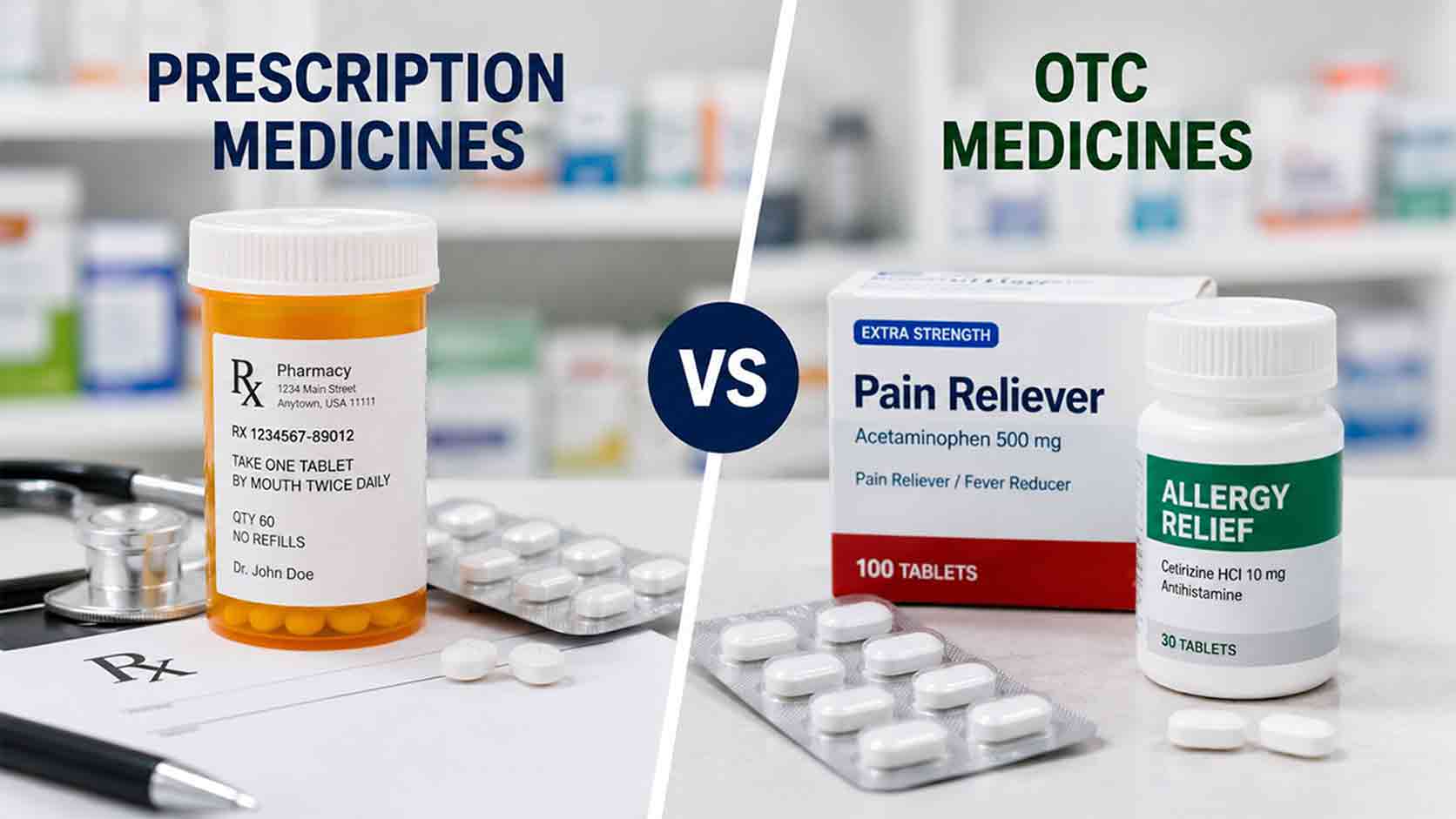
Have you ever walked into a pharmacy and noticed that some medicines are kept behind the counter while others are available directly on the shelves?
The reason is simple: not all medicines are meant to be used in the same way. Some medicines require a doctor’s prescription, while others can be purchased without one.
Understanding the difference between prescription medicines and over-the-counter medicines can help you make safer and more informed decisions about your health.
What Are Prescription Medicines?
Prescription medicines are drugs that can only be purchased with a valid prescription from a licensed healthcare professional.
These medicines are generally used to treat health conditions that require medical supervision, such as infections, diabetes, high blood pressure, asthma, or heart disease.
A doctor prescribes these medicines after evaluating your symptoms, medical history, current medications, allergies, and overall health.
This evaluation helps ensure that the prescribed medicine is safe, effective, and suitable for your specific medical condition.
Prescription medicines should only be used under the guidance of a qualified healthcare professional.
Because prescription medicines can have stronger effects, greater risks of side effects, or possible interactions with other medicines, they should never be taken without professional medical advice.
What Are OTC Medicines?
Over-the-counter medicines, commonly known as OTC medicines, are medicines that can be purchased directly from a pharmacy without a doctor’s prescription.
These medicines are commonly used to manage minor and short-term health concerns, including:
- Headaches
- Fever
- Coughs and colds
- Allergies
- Acidity
- Minor aches and pains
Although OTC medicines are generally considered safe when used correctly, they are not completely risk-free.
It is important to read the medicine label carefully, follow the recommended dosage, and avoid taking the medicine for longer than advised without consulting a healthcare professional.
Prescription vs OTC: What’s the Main Difference?
The biggest difference between prescription and OTC medicines is the level of medical supervision required.
Prescription medicines require a doctor’s evaluation before use. OTC medicines are intended for common health conditions that people can generally manage themselves when the medicine is used according to the label.
Another important difference is the level of ongoing monitoring required during treatment.
Prescription medicines may require follow-up appointments, dosage adjustments, blood tests, or regular health checks. OTC medicines usually do not require ongoing medical supervision when used as directed.
| Feature | Prescription Medicines | OTC Medicines |
|---|---|---|
| Prescription Required | Yes | No |
| Medical Evaluation | Required before the medicine is prescribed. | Usually not required for common conditions. |
| Common Uses | Infections, diabetes, asthma, high blood pressure, and heart disease. | Headaches, fever, coughs, colds, allergies, acidity, and minor pain. |
| Medical Monitoring | May require follow-up visits and health checks. | Usually not required when used as directed. |
| Risk Level | May have stronger effects and require closer supervision. | Generally safe when the label instructions are followed correctly. |
Why It Matters
Using the wrong medicine, or using the right medicine incorrectly, can delay recovery, worsen symptoms, or lead to serious health complications.
Prescription medicines are selected based on a person’s specific condition, medical history, dosage requirements, and possible medicine interactions.
Never share prescription medicines with another person or use someone else’s medication, even when the symptoms seem similar.
A medicine that is safe for one person may not be appropriate for someone else. Differences in age, health conditions, allergies, current medicines, and medical history can affect how a medicine works.
It is also important to avoid taking more than the recommended dose of an OTC medicine. Taking multiple OTC products at the same time may result in accidentally consuming the same active ingredient more than once.
When Should You Consult a Doctor?
OTC medicines can provide convenient relief for many common health concerns, but they should not replace professional medical care when symptoms are persistent or severe.
You should consider consulting a doctor when:
- Your symptoms do not improve after using an OTC medicine for a few days.
- Your symptoms become more severe.
- You experience unexpected or serious side effects.
- You are unsure whether an OTC medicine is safe with your current medications.
- You have an existing medical condition.
- You are pregnant, breastfeeding, or giving medicine to a child.
If an OTC medicine does not improve your condition, it is generally safer to seek medical advice rather than continue self-medicating.
Tips for Using Medicines Safely
Whether you are using a prescription medicine or an OTC medicine, responsible use is essential.
- Always read the medicine label before taking a dose.
- Follow the recommended dosage and timing instructions.
- Do not take another person’s prescription medicine.
- Inform your doctor about all medicines and supplements you are currently taking.
- Check the medicine’s expiry date before use.
- Store medicines according to the instructions on the package.
- Ask a doctor or pharmacist when you are uncertain about how to use a medicine.
The Bottom Line
Both prescription medicines and OTC medicines play an important role in modern healthcare.
Prescription medicines help treat conditions that require professional medical guidance, while OTC medicines provide convenient relief for common and short-term health problems.
The key is understanding when each type of medicine is appropriate and using every medicine responsibly.
Taking a few moments to understand what you are using and following the instructions carefully can go a long way in protecting your health.
Glossary: Prescription Medicines vs OTC Medicines
| Term | Meaning |
|---|---|
| Prescription Medicine | A medicine that can only be purchased with a valid prescription from a licensed healthcare professional. |
| Over-the-Counter (OTC) Medicine | A medicine that can be bought without a doctor’s prescription to treat common health conditions. |
| Healthcare Professional | A qualified medical expert such as a doctor, pharmacist, or nurse who provides healthcare services. |
| Dosage | The recommended amount of medicine to take and how often it should be taken. |
| Medical Supervision | Monitoring and guidance provided by a healthcare professional while using a medicine. |
| Side Effects | Unwanted or unexpected reactions that may occur after taking a medicine. |
| Self-Medication | Taking medicines without consulting a healthcare professional. |
| Medicine Label | The printed information on a medicine package that explains how to use it safely and correctly. |
| Pharmacist | A healthcare professional trained to prepare, dispense, and advise patients on the safe use of medicines. |
| Drug Interaction | A change in the effect of a medicine when it is taken with another medicine, food, or supplement. |
| Medical History | A record of a person’s past illnesses, treatments, allergies, and health conditions. |
| Licensed Healthcare Professional | A doctor or other qualified medical professional who is legally authorized to diagnose illnesses and prescribe medicines. |