
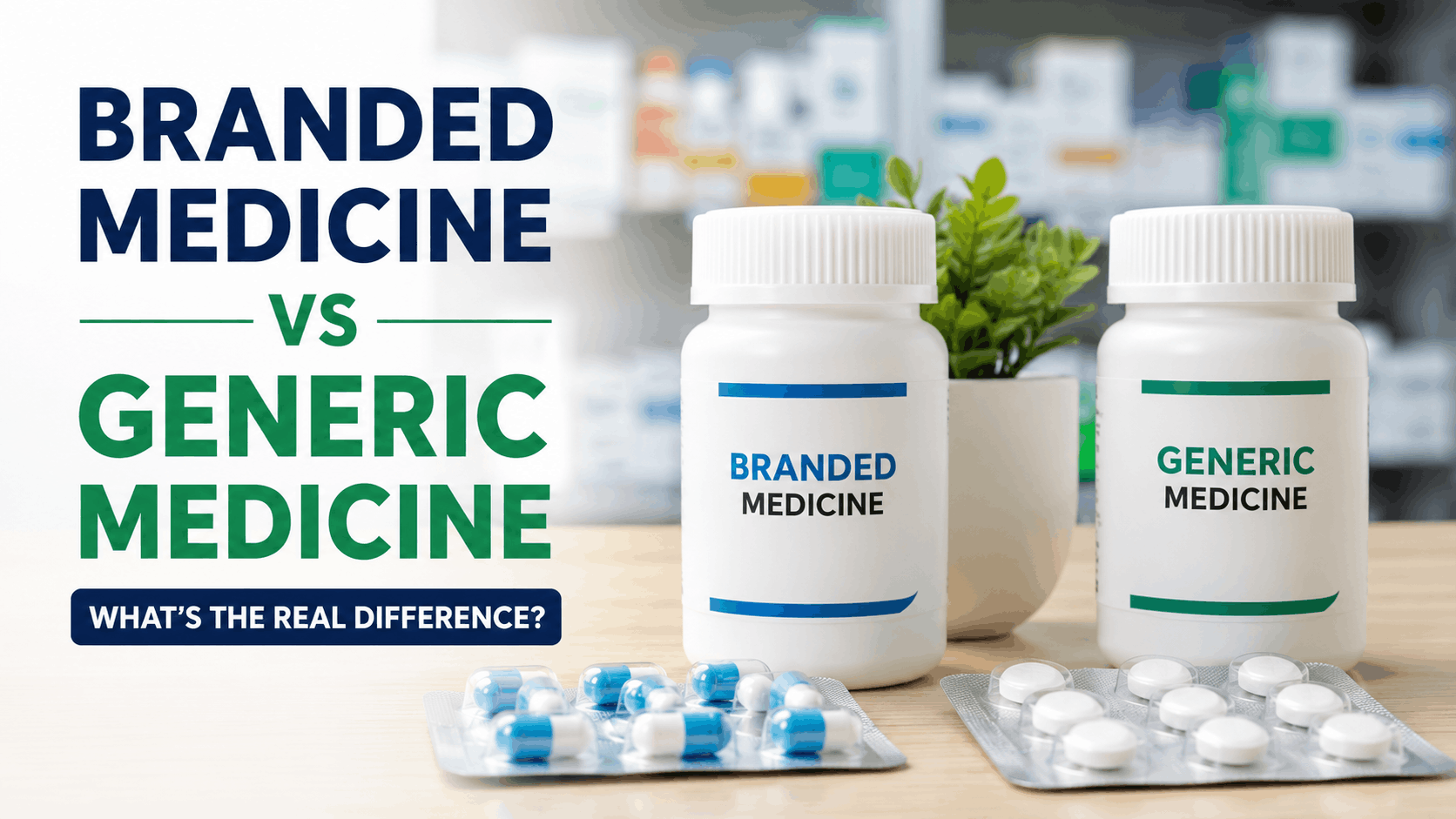
When you're standing at the pharmacy, you've probably noticed that the same medicine is often available in two versions—one with a well-known brand name and another that's simply called a generic. The price difference can be surprising, which naturally raises the question: Are generic medicines really as effective as branded ones?
The short answer is yes. But understanding why can help you make more informed healthcare decisions.
A branded medicine is the original version of a drug developed by a pharmaceutical company. Before it reaches the market, it goes through years of research, clinical trials, and regulatory approvals. During this period, the company holds a patent, allowing it to exclusively manufacture and sell the medicine under a brand name.
Once that patent expires, other pharmaceutical companies can produce the same medicine as a generic medicine. The active ingredient, strength, dosage, safety, and intended use must match the branded version. In other words, the medicine works the same way in the body and is expected to provide the same therapeutic effect.
Why Are Generic Medicines More Affordable?
The answer is simple. Generic manufacturers don't have to invest in discovering the drug or conducting the initial large-scale research and development. Since much of that work has already been completed by the original manufacturer, generics can be produced and sold at a lower cost while still meeting strict quality and safety standards.
One area where you may notice a difference is in the medicine's appearance. Generic medicines can vary in colour, shape, size, or packaging. They may also contain different inactive ingredients, such as colouring agents or preservatives. These changes do not affect how the medicine works, although people with specific allergies or sensitivities should always read the label or consult their doctor or pharmacist.
It's also important to understand that not every medicine is automatically available as a generic. If a drug is still protected by a patent or is newly introduced, only the branded version may be available. In such cases, patients may need to wait until the patent expires before generic alternatives enter the market.
Whether you choose a branded or generic medicine should always be based on your healthcare provider's advice and your individual medical needs. In most cases, both options offer the same effectiveness and safety when sourced from licensed and reputable manufacturers.
At the end of the day, the goal of any medicine is the same—to help patients recover, manage health conditions, and improve their quality of life.
Understanding the difference between branded and generic medicines allows you to make confident, informed choices without assuming that a higher price always means better quality.
The next time you're offered a generic alternative at the pharmacy, you'll know that affordability and effectiveness can often go hand in hand.
Glossary
| Term | Meaning |
|---|---|
| Generic Medicine | A medicine that has the same active ingredient and works the same as a branded medicine but is sold under its chemical name or another name, usually at a lower price. |
| Branded Medicine | The original medicine sold by a pharmaceutical company under a specific brand name. |
| Active Ingredient | The substance in a medicine that produces the intended medical effect. |
| Dosage | The amount of medicine that should be taken at one time or over a specific period. |
| Therapeutic Effect | The beneficial or intended effect a medicine has in treating or preventing a disease. |
| Pharmaceutical Company | A company that researches, develops, manufactures, and sells medicines. |
| Clinical Trials | Research studies in which medicines are tested on people to check their safety and effectiveness before approval. |
| Regulatory Approval | Official permission from a government health authority to sell and use a medicine. |
| Patent | A legal right that gives a company exclusive permission to make and sell an invention, such as a new medicine, for a limited time. |
| Research and Development (R&D) | The process of discovering, studying, and improving new medicines or products. |
| Manufacturer | A company that produces or makes medicines or other products. |
| Inactive Ingredients | Ingredients in a medicine that do not treat the condition but help with the medicine's form, taste, colour, or stability. |
| Preservatives | Substances added to medicines to prevent spoilage and increase shelf life. |
| Licensed Manufacturer | A company that has official government permission to manufacture medicines. |
| Healthcare Provider | A qualified medical professional such as a doctor, nurse, pharmacist, or healthcare institution that provides medical care. |